
If you own an electric vehicle in Broxbourne, you may have noticed something strange with your home charger. Some EV chargers pause unexpectedly. Others refuse to start during off-peak hours. A few even show incorrect energy readings or display errors about communication or load limits.
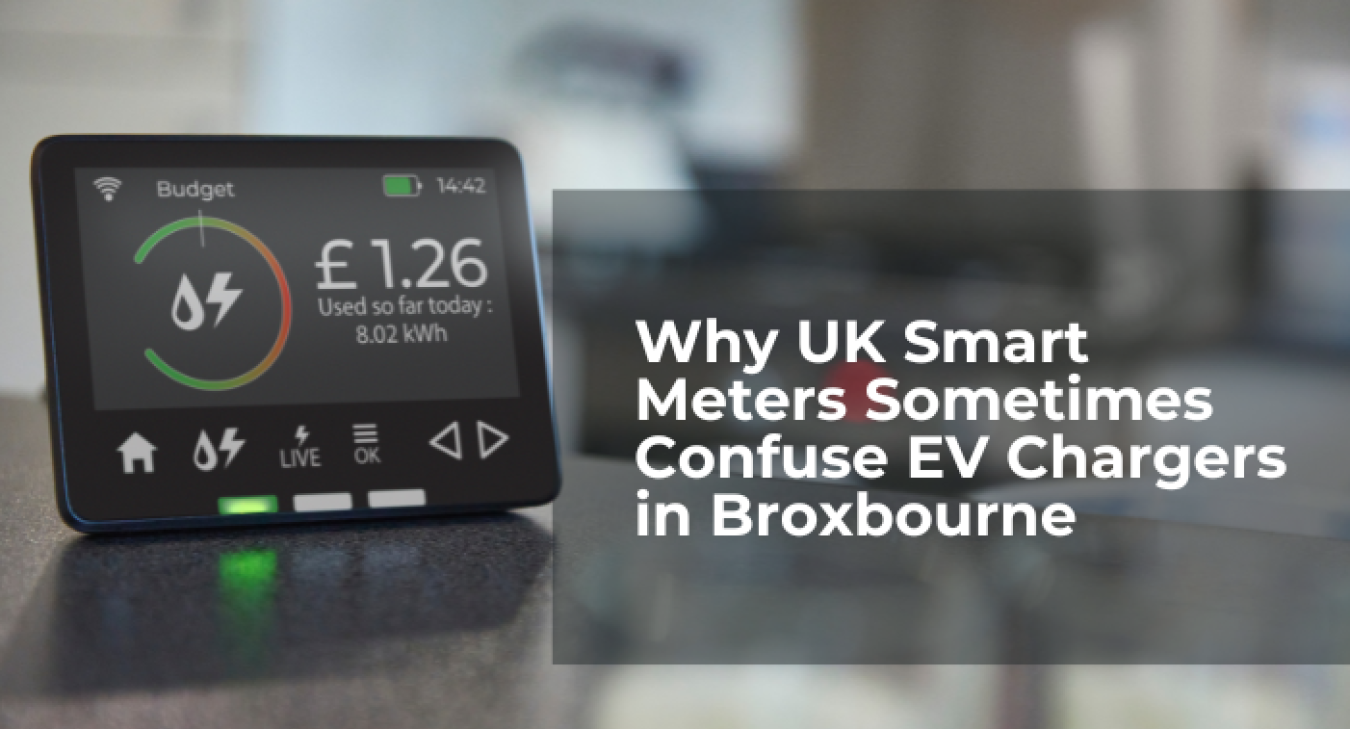
Many EV owners assume it is a charger fault. Others blame the vehicle. But one of the most overlooked causes comes from something most homeowners never suspect. The smart meter.
Across the UK, smart meters are designed to help households manage energy more efficiently. But in certain situations, the smart meter and the EV charger do not quite understand each other. This can lead to delays, reduced speeds, error codes, and confusing behaviour.
In this blog, we will explore why UK smart meters occasionally confuse EV chargers, why it happens more often in Broxbourne homes, and what you can do to make your EV charging system run smoothly.
Why This Happens More Often in Broxbourne
Broxbourne has a large mix of property ages, from older homes with legacy wiring to newer developments equipped with modern energy systems. This mix makes the interaction between smart meters and EV chargers more complex because many homes still rely on older supply configurations that were never built with EVs in mind.
When a smart meter and an EV charger communicate using slightly different expectations about load, timing, or commands, the result can be inconsistent charging.
How a Smart Meter Influences Your EV Charger
Smart meters are not passive devices. They continuously measure and report your home’s energy use. More importantly, they communicate with your energy supplier and sometimes even adjust the available capacity on your supply depending on tariffs, load limits, or safety considerations.
Your EV charger, meanwhile, is designed to protect your home from overload. It reads the available load and decides how much power it can safely deliver. If the smart meter sends readings that are inconsistent, delayed, or limited, the charger may react by reducing speed or pausing.
Here are the most common issues:
1. Delayed load reporting
Some smart meters send load data in intervals rather than real time. If your charger requests load information and receives outdated data, it may assume the home is overloaded and reduce charging speed.
In Broxbourne, this happens more often in homes with older SMETS1 meters.
2. Incorrect supply limit readings
Certain smart meters communicate a limit lower than what your home actually has. For example, your main fuse may be 80 amps, but the meter may report 60 amps. The charger then reduces output to stay “safe,” even though the true supply can handle more.
This results in slower overnight charging.
3. Demand flexibility events
Energy suppliers can temporarily reduce household supply during peak stress on the grid. This is more common in winter. Your smart meter receives the command automatically.
Most homeowners never notice a difference in lights or appliances. But your EV charger does. It sees a lower available load and slows down.
4. Time-of-use tariff confusion
If you use an off-peak EV tariff, the smart meter controls when the low rate begins. If the meter clock is misaligned or updated late, your charger may start too early or too late.
This can lead to:
- Missed off-peak windows
- Slow charging
- Higher charging costs
Many drivers in Broxbourne are unaware that their smart meter controls tariff timing.
5. Smart meter communication dropouts
Smart meters rely on communication hubs. If the hub loses connection, the charger may receive incomplete load data. When the charger cannot confirm safe load conditions, it pauses charging automatically. In essence, the charger is doing its job, even though the frustrations feel like a fault.
How to Know if Your Smart Meter Is Confusing Your EV Charger
Many homeowners in Broxbourne contact us saying:
- My EV charger suddenly slows down
- My charger stops in the middle of the night
- My smart charger keeps recalculating load
- My car charges fine elsewhere but not at home
- My off-peak schedule is inconsistent
These are classic signs of a smart meter communication mismatch. Another big clue is this. If restarting the charger or the vehicle temporarily fixes the problem, the root cause is often inconsistent load data from the meter.
How to Fix Smart Meter and EV Charger Conflicts
The good news is that the problem is almost always solvable. Here are the most effective solutions.
Update or replace your smart meter
If your home still uses a first-generation smart meter, upgrading to a newer model improves communication and charging reliability.
Install a load management system on the EV charger
This gives the charger its own method of measuring real-time load instead of relying entirely on the meter. It delivers far more accurate readings.
Adjust the charger’s schedule settings
Some chargers allow the installer to override smart meter timing issues by using internal scheduling.
Upgrade the consumer unit
Older consumer units can interfere with communication between the charger and the meter. A modern unit provides clearer, more stable load readings.
Increase your main supply
If the smart meter limits your supply too aggressively, upgrading from 60 amps to 80 or 100 amps can help.
When to Call an Electrician in Broxbourne
If you notice strange charging behaviour and suspect your smart meter, it is best to have an EV-approved electrician inspect your setup. The electrician can test the:
- Load readings
- Supply limits
- Smart meter communication
- Charger settings
- Consumer unit capacity
Most issues can be fixed in a single visit.
Book an EV Charger Assessment in Broxbourne
JJB Electrical specialises in EV charger installations, diagnostics, and smart meter compatibility checks in Broxbourne. If your charger behaves unpredictably, we can identify the cause and restore reliable charging. 📞 Call JJB Electrical on 01992 276087. Your local EV charger experts in Broxbourne